|
|
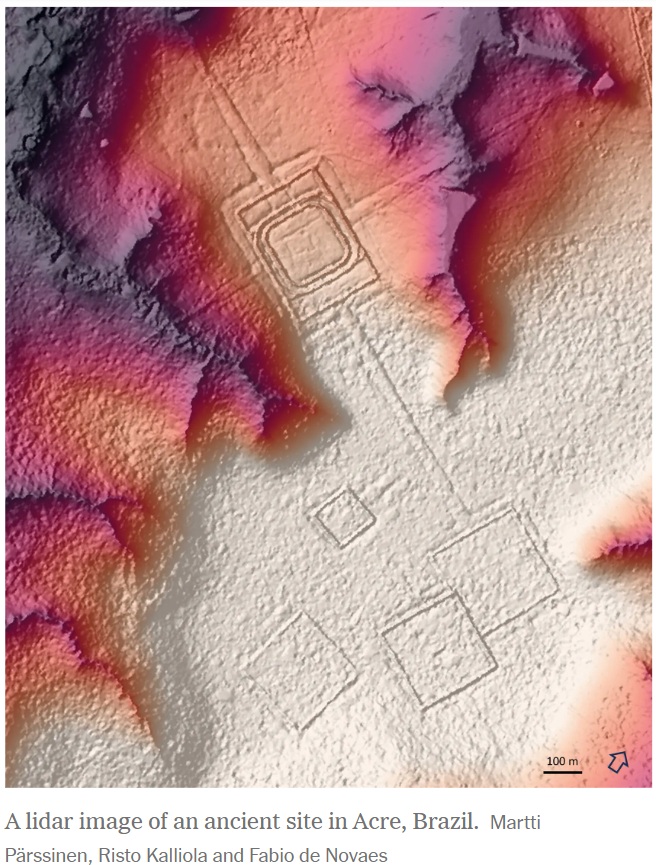
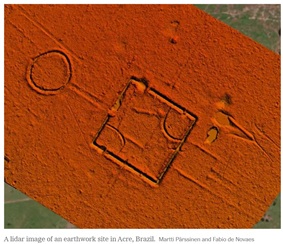
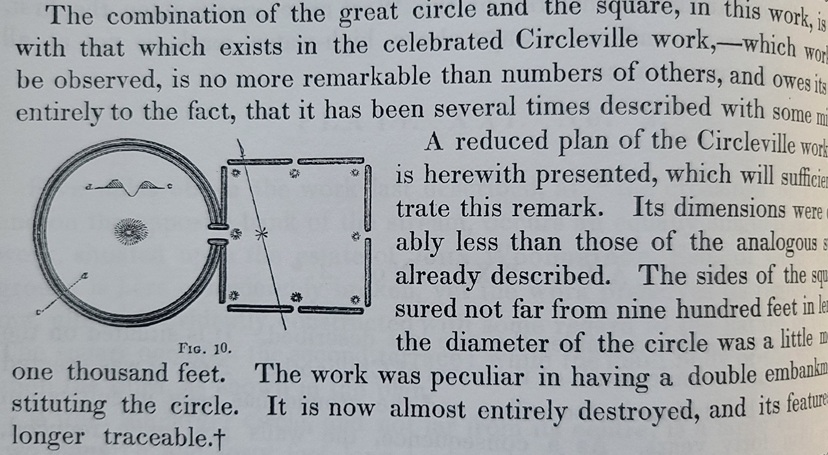
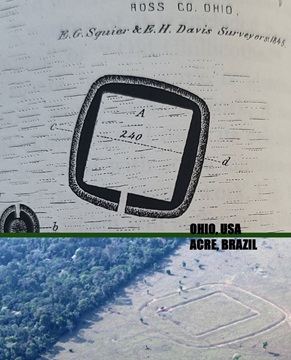
By Dean Adams Curtis There are over 20,000 of these precolonial geoglyphs in Southwest Amazonia, including in Peru and Bolivia. The earthworks date from 3000–1000 years before present. Humans have been in the area for 10,000 years and in South America for 16,000. When I saw images of the ancient earthworks in Brazil in the archaeologist’s report in Nature, it immediately amazed me that the earthworks of the Amazon River system were strikingly kin to ancient earthworks in Ohio and through North America's Mississippi River system, including the Ohio River. Foremost similarity first. “A bluff model is proposed,” noted archaeologist William Denevan in 1996, when his review found, “most settlement was not in the floodplain but rather on the valley-side bluff tops adjacent to active river channels. Subsistence was a multistrategy utilizing floodplain beach and levee soils and aquatic wildlife periodically in combination with more stable bluff edge gardens, agroforestry, and hunting.” These are words you could expect to hear said or see written by Ohio archaeologist Bradley Leeper about the earthworks on bluff tops along the Miami and Scioto river valleys feeding into the Ohio River. The Ohio “Hopewell” earthworks date from 2100-1600 BP. The drawings of Ohio geoglyphs were prepared by surveyors of the North American sites and were published by The Smithsonian Museum. The Acre, Brazil images are courtesy of the archaeologists and Nature. For deeper thoughts about the geoglyphs click the images to left and right. |
|
|
|---|